Friday, April 29, 2011

Tell it to me, Magician King, St. Vincent

Here is the latest effort, Tom waits song #2 from Armorie Record Clubs selection this month. It will want to make you do a slow waltz around the room.

Tell it to me by Armorie Record Club
This song is less sad than it is funny. Usually the sympathetic one in the story is is the guy who is getting cheated on, not the real father of a child resulting in some night of major indiscretion.

Can't get this song out of my head recently:


Or this song


I am overly excited for this:

If you haven't read the first one, it's great.

Peace out.

Tuesday, April 19, 2011

Songs of late

We are doing a Tom Waits disc this month for Armorie Record Club. Here is my first pick:
if i have to go by Armorie Record Club

Or, if you missed last month's selection, here is Beck's Guero in it's entirety.

Guero by Armorie Record Club

Work on KKVB2 is slow but oh so sweet, I'm excited to finish it up this summer.
Calvin

Friday, April 15, 2011

Hip Hop Memoirs....

So I thought I'd do a little 3 in 1 book review since a few books I've read in the last 3 months have a similar theme. All three were pretty fluffy reads, but sometimes I can't resist letting my mind run on auto pilot while in the bathtub after answering phones all day. So here's goes.

1. "I Make my Own Rules" by LL Cool J

I got this as kind of a gag gift from my brother in law for Christmas. Seriously, this book is pretty awful, but I had to get through it. LL was kind of responsible for my initial interest in the world of Hip Hop. We never had cable growing up, and some of our family friends, the Morgans, occasionally would give my sister's tapes that had 6 hrs of the Disney Channel or MTV recorded over them. We all got to know those video cassettes pretty well. Most of the stuff on there was Paula Abdul or whatever, but I remember one tape specifically because it was pretty much my first actual encounter with Hip Hop. It was 1990, I was like 6 years old, and Momma Said Knock You Out was the most incredible thing I had ever heard. I may have heard Vanilla Ice before that or something, and I probably liked it, but this was on another plane to me. Honestly I didn't understand everything he was saying, but the braggadocio was so intense that you HAD to believe that he actually believed the things he was saying about himself.
That was the only song I ever knew until about 8th grade when I kid in my class had Walking with a Panther in his Disc man. This was a year before downloading and burning CD's became common in most households, so I couldn't get a copy of it from him, but I borrowed it and listened to it over and over again on the stereo in my room with my cheap headphones plugged in. It was mostly something about how weird he was. Nobody else was gonna rap the line "The pudding is delicious", except for him. Look at how spastic he is in this video:

No matter how much people jump around on stage, they won't look as crazy as LL used to when he was some excited eager kid. The no shirt thing works for Lil Wayne, but LL perfected it. I make a pretty distict homage to his video for I'm that type of guy in my Peach Fuzz video.
Anyway, the book kind of spoils all that, it was written in 1997, which is right at the point where I lose interest in his whole career. Of all three of these books, this one is the most painful to read. The most interesting moments are about his turbulent relationship with his father. His dad once got so angry he came to the house with a shotgun and ended up shooting his mother and grandfather. They recovered, but his father moved to California and changed his name and was never prosecuted. Later in life LL hired his father to come be his manager, and as you might have guessed, that didn't turn out so hot either. For all the violence he experienced as a child it's actually surprising that his lyrics are some of the least violent in mainstream rap.
LL tends to overdo it on some of the drama and motivational stories. My favorite chapter is called "Cry School", the title strikes me as funny because it's the easiest pun in the world. It's like he was thinking, "I've got to come up with another punny chapter heading,, yeah, that'll work, because I cried alot in high school!". He talks about how he was made fun of for his skinny legs and big lips and how hard it was for him. You would never think LL had self confidence issues. But I guess you could say the same for Comedians and actors, projecting themselves into a character maybe helps them deal with that.
Mostly, his advice tend to be things like, "Keepin' it real ain't about carrying a gun and smoking blunts. I'ts about being true to yourself and those around you." and "A relationship-any relationship-only works when two people are growing together." At the end of the day LL is a family man who's life is a lot less glamorous or exciting as his supercharged youthful music was. I'm not surprised, but the little kid singing "Mama said Knock you Out" inside of me died a little.

2. "Decoded" by Jay Z
This book came out last year and was marketed as a high end coffee table book--a compilation of lyrics, explanations, pictures, and stories. As a piece of art I would say that the book works rather well. It's fun to look at and well designed. As a memoir, there are a few great moments. Jay is at his strongest when he is telling stories. It's why his music is compelling, he rarely makes you feel like you have to agree or disagree with the narrator. When he tells stories about the industry or his childhood the images are vivid and detailed. When he begins to talk about government, social issues, or possible solutions, the logic gets clouded and he starts to become too self aggrandizing for my taste. I actually believe the Jay has certain moments in his music where he makes powerful arguments in a clear and precise way, but he seems to contradict himself a lot in this book. Even points of contention are easy to agree with him on aren't framed well.
As a lyric book, I would say the project is the weakest. I don't feel like his explanations of his lyrics do anything to deepen them or make them any stronger. Sure, to the outsider it might be helpful to understand what certain slang is referring to, but by the tenth time he talks about how the song is reflecting "the hustler's mentality", I get a bit bored. I had to skip several lyric pages just to get through the book. A good storyteller does not need to make a "making of" book. I'd prefer they tell stories that inspired the lyrics instead of talk about exactly what the lyrics are supposed to inspire.
My biggest complaint is that the book is not more personal. The most exciting parts talk about controversy in his career. He talks about the Oasis Glastonbury feud and about about his disagreements with Oprah, and about a few of his run ins with the police, but very little else is all that thick. I wanted to hear about his falling out with Jaz, his issues with Diplomat and Jim Jones, his relationship with Beyonce of course....but he offers no real information. Also, even the portion of the book where he talks about his life as a hustler is never specific. He talks about certain practices, but no detailed story telling, and that was disappointing.
I also wanted him to talk more about his transition from a speed rapper to a storyteller, because the shift in creative direction is intriguing to me.


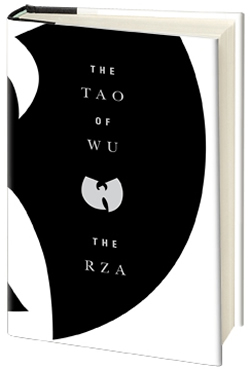
3. “The Tao of Wu” by the RZA
Last but not least I picked up the Tao of RZA at Border’s closing sale last week for %70 off. Out of the 3 books I probably enjoyed this one the most. The writing was definitely the strongest, but I think a lot of credit could go to the fact that he had a co-writer to organize all of his thoughts. Basically, RZA sat down and did just rambled about his philosophies for a several hours and the co-writer organized it into something more cohesive. Like Jay-Z, RZA is at his strongest when telling the stories.
The best thing to me about the Wu-Tang clan is how they made connections with other mythology and applied it to themselves. RZA doesn’t just like Kung-Fu movies, he feels like they embody his life. To RZA, Chess is Hip Hop, Kung-Fu is Hip Hop, Religion is Hip Hop. He is skilled at absorbing and integrating the things he loves into his music, like the ultimate fan boy. RZA is at heart a just a huge nerd who is extremely talented in emulating his influences. Because of this, he spends most of the time talking about his various obsessions and showing how he uses them in his music. He doesn’t sound humble either, but at least his excitement seems more about his influences than himself.
When RZA does get introspective about his career, he mentions that he has never had as powerful production as he did in the early days. He has made thousands of beats, but they are not as appreciated because they are too polished. He feels like not knowing the techniques makes for a better project. Being an expert in something means you won't make anything new necessarily.

RZA’s weakest moments are when he attempts to explain certain doctrines of principle. To me statements like “Knowledge is Power and Power is Water and Water is also Love because it’s all around us.” are just Gobbledigook. Talking about the “12 jewels” is nice at all, but I’m more of a fan of practical information that the theoretical concepts that RZA is into. He’s better off writing about how he used to snatch guns out of people’s hands than he writing about the practice of meditation and oneness.
Also, I wanted more information on conflict within the Wu-Tang. He seems only comfortable when dwelling on the times when they were a cohesive unit, and doesn’t get into their current differences and conflicts. He mentions Raekwon saying, “RZA, you want to make peaceful music, I want to make music that’s basically punching people in the face,” and that quote almost begs for more information about their conflicting views. Currently, Raekwon and Ghostface are the only really relevant members of the Wu-Tang Clan, so it would have been interesting to read how he feels about their approach.

I just wrote way too much that nobody will probably read. Congrats if you made it to the end. Next time, I’ll review “Life” by Keith Richards. Read up if you want to discuss it with me.

Saturday, March 19, 2011

Meat is worth it. Book Review.


So I just finished reading this book by Jonathan Safran Foer. I am not even really sure why I read it, I usually hate these kinds of things, so why put myself through the torture? I guess I was just curious. After finishing it, I can definitely tell you that it wasn't quite convincing enough to make me a Vegan, but he had some good points that at least made me think about my relationship to my diet and the forces that are at play in the background. Most of his arguments are well framed and logical enough that it would be hard to disagree with any of the content. But, and this is a huge but, the writing style of this book made it a chore to get through. He marries a personal memoir with interviews and research about factory farming in a way that made it really difficult to stomach. Talking about the facts of factory farming gets a little over-emotional because of this, and it gets in the way of a reader really forming their own logical conclusion. At the end it takes a particularly bad turn as he concludes that factory farming isn't just a moral dilemma, but should be altogether illegal. He compares allowing your children to eat thanksgiving turkey with allowing your children to play with toys that have been painted with lead paint. It's not that I don't acknowledge any health risk with eating factory farmed animals, but putting the risk in those terms seems a little over the top, even after reading his compiled evidence.
To the writer's credit, certain arguments he made do make me want to eat less meat in general because of the almost inevitable support you lend to factory farming, which he argues is unsustainable in the long run and overly cruel to the animals. He also got me thinking for the first time about how all animals have different places in all cultures. It would be inhumane to beat a dog into its kennel in the U.S., but not in India where they eat the creature. Transversely, it would be awful to beat a cow in India, and in the U.S. we think of that as a common practice to control the animal. Cultural ideas about the animals generally outweigh logic.
Sadly, at the end of the book, Foer throws water on anyone thinking they can go away from the book thinking that they have learned to eat fewer factory farm animals. He takes a staunch "all or none" position, even dramatically framing the animal rights issue in the same context as slavery and the civil rights movement. He claims that Martin Luther King didn't tell people to only ride buses when it is inconvenient not to, he told them to boycott them all together. The half measure of eating less meat is simply not acceptable to the author. The conclusion is narrow and it seems unlikely that anyone would ever adopt it, and so it makes the reader feel like they have to either be part of the club or have missed the point completely. There is no leeway, and frankly, he just comes off as being bossy or preachy, although well-informed.
The book also has other bits and pieces that bothered me in numerous ways. I found myself either being disturbed at the poor ethics of the factory farming industry, or disturbed by the author's refusal to accept any practice as being ethical. To me, bolt guns on cows seems humane enough, and I can't think of a way to kill a cow more quickly with less pain. Foer certainly doesn't suggest an alternative, but is concerned that sometimes this doesn't completely do the job. I don't know of any method that would be full-proof. Also, he seems incredibly concerned with the castration of cattle, but never mentions whether his dog is castrated, or whether he supports spaying and neutering pets.
The language is particularly grating. Castration becomes "Mutilation". Genetic Engineering creates "Frankenstein Birds". Although I don't argue that these practices take place and may or may not be ethical or sustainable, the language places a sinister undertones on the facts. At one point he describes himself watching youtube videos of people hauling in big fish. He describes the scenes as men congratulating each other as if they had just cured cancer, while women in bikinis stare on admiringly. It annoyed me that the act of catching a fish had to be framed in his book as a typical, stupid American custom, like watching the super bowl or playing poker. Having grown up in Alaska and lucky enough to have a Dad to take me fishing, I never had a similar experience to the one he describes. I am aware that the practice is so much more than a bunch of jocular types on a boat. Painting the picture becomes more important than looking at the situation from all different angles.
Although I overwhelmingly had a negative experience with the book, I would recommend it to almost anybody. I learned a lot of information that I wasn't previously attuned to, and I think that sort of thing only usually happens when you let an extremest lay out their side for you in detail. And honestly, I never did disagree with the idea of eating less meat. It is even within my own religious principles...so it was good to have a modern understanding of why this belief is a positive one. If nothing else, reading Foer's book will make you consider your position and work to come up with your own narrative and logic to support it.

Stay tuned for my next book report on Jay-Z's "Decoded". Hahahahaha

Saturday, February 26, 2011

Pogo mashups, Accordian


Just ordered this on Amazon, should be a good read.


I have been getting nostalgic and geeking out over these Pogo sound collage videos lately. Especially this one. They don't make any type of sense but it makes me want to watch these films again.


Last night andrew and i performed at the USU IMC radiohead cover night. Here are the videos for it.
4 minute Warning


Codex


The accordian used to be my dad's. I think it's really bizzare he even owned it for so long. He can actually play it a little bit, and he would pull it out every couple of months when we were kids for our family home evening to play "5 green and Speckled Frogs", or "How much is that doggy in the window". I think there are certain people who would pay money to watch my dad play accordian and sing. I'm one of the lucky people who have witnessed it. I once asked him if I could have the accordian, he told me if I went on a date once a month during the school year he would give it to me. I ended up getting married and he wrapped it up as my wedding present. Good ol' dad. And no, I did not just get married for the accordian.

Friday, February 18, 2011

Dahl, GNR, epicmealtime

Glad a 4 day week end has come around. I was sorta going crazy on the Spanish phones until 6:30 last night. The job is okay, just sometimes can be depressing based on the nature of the circumstances of the people calling in. The good thing is now I am starting to do the processing bit, which means I can half listen to music and podcasts and whatnot while working on the cases. Can't complain about that.

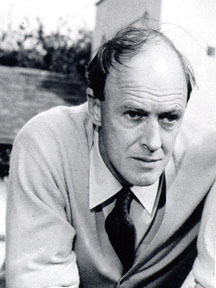
I am reading "Storyteller", which is this awesome 600 page Roald Dahl Biography that came out in September. It's really well done, and from what I understand the writer had pretty much full access to the Dahl Estate. He read hundreds of letters and book drafts and the whole thing is pretty comprehensive. I guess Dahl was a bit of a nasty person and extremely opinionated, some even described him as a bully. Above all, it seems he was a braggart. His personal experiences were in his mind more valid than anybody elses. Because of this, he would exaggerate wildly and even make up huge details in order to best the stories of those around him. The author really kind of softens this idea by looking into why he was that way, and how his bad temper really contributed to great writing. Maybe pathological liars are just contributing to society in a whole different way.

There is a chapter in the book that talks about how Roald Dahl related to children much more than adults. His outlook on children was a bit grisly, but I thought it was interesting. He said they are creatures that are only concerned with survival. They judge people on if they are a threat to them or not, and gauge people on how essential they are to their own survival. In that way, children are incredibly selfish. In Roald Dahl's books, the children usually are orphans or from 1 parent households, and the adult world is against them. The adults are, for the most part, evil funcrushers who despise children. (The witches, Matilda, James and the Giant Peach, The twits). Occasionally an adult comes along that is there to help the child, and this adult is given special consideration. Usually these adults are basically children that have never grown up. (Willy Wonka, Danny's Father, Mr. Fox). The author of the biography decides the Roald was on to something, as children related with his books and the "me against the world" themes that made them so popular. Dahl was quick to point out, however, that children being selfish, self-absorbed creatures is not a bad thing. In fact, it's just a different way to describe purity or innocence. As adults in a society, we are led to give people the benefit of the doubt. Even people who do not have our best interest in mind are acceptable if they are funny, or serve some other useful purpose in the community. But it doesn't matter how funny you are, to a child, if you are mean, you are to be avoided and overcome, not tolerated. Anyways, just some thoughts I was having while reading. It's a good book, if you liked Dahl as a kid.

Speaking of authors, Brian Jacques passed away last week. You ever read those Redwall books? That was my life in Elementary and Middle School. I think I read 8 or 9 of the books. Now there are like 22. Crazy.

Here is the song I made two weeks ago for my last Beck cover. I am trying to mess around with sampling. And what would be a better sample to mess with the first time around than GNR's most famous riff?

Just a Message to Her by Armorie Record Club

The new Radiohead album dropped today. "The King of Limbs". I'm giving it a first listen as we speak. Thoughts later. Andrew and I will be playing some songs at the Radiohead cover concert at the Lundstrom Center next Saturday. You should come if your around.

Odd Future Wolf Gang Kill Them All is doing some insane stuff right now.

I watched Restrepo last weekend. I have a goal in life to never get shot at. This documentary was so scary at certain parts I had to close my eyes. It's streaming on Netflix so check it out.

This is so awesomely gross. These Epic Mealtime guys are killing it right now.

Sunday, January 30, 2011

crunch factor, work of art, Solitary confinement

Hey,
Tomorrow we are going to go see the Best of the Fest Films in Ogden. I've lived in Utah a while and never been to Sundance, it seems like it is a bit of a pain in the rear to get there and deal with parking and crowds and expensive tickets. But Anita told us about Best of the Fest in Ogden, which is where they take two award winning films and show them for free. Luckily, I was going through Ogden on my way to pick up Nat from the airport a few weeks ago on the day they were giving out tickets. I had to stand in line for a while, but we got some! So we are going to see "Being Elmo" and "Another Earth" Tomorrow. I'll post some reviews later this week maybe.

Yesterday we went to the temple and had Sushi. I think it gets better and better each time you eat it. The Mexican Crunch roll is particularly amazing, we both agree that the "Crunch Factor" greatly enhances most food. Take Crunchwrap Supremes, or Double Deckers for example. Those double decker tacos were my jam in the Middle School Cafeteria.

We also watched an episode of 30 days, that show by Morgan Spurlock where he makes someone spend 30 days with a person that has a drastically different lifestyle. The episode was about a guy learning about New Age Practices. Most of it looked pretty bogus to me, specifically the Rakee...I think that's how you spell it. While he didn't really get into alot of the stuff, he kept the practices that actually helped him to relax. Good way to go about it I think. We got to thinking what the worst thirty days would be for us individually. For me, it would be putting me on the Raw Food Vegan diet for 30 days. I gotta have meat to function. For Nat it would be eating macdonalds for 30 days or living with Gun Activists. We also think living with Gilbert Godfrey for a month would be almost unbearable.
We also think that my the funniest position we could put my Dad in would be to force him to be a contestant on Project Runway. Love that show.

By the way, Natalie and I caught up on Work of Art: Next Great Artist, and we both really liked it. It was cool to see people work under deadlines to create. My first criticism of the show was that real artists need more time to create than the reality show could provide. But then I realized that in my own creative process, I don't really sit around waiting for an idea to come to me. I actively pursue it, spend time working on a goal and ideas shift around until something comes out of it.

Shad goes real hard here:


My first week on the job for reals wasn't too bad. The days are long but the 3-day weekend makes up for it. Everyone I talk to is either in crisis or really uneducated, so it makes for a bunch of tough conversations. I like that my Spanish is improving though, great perk.

Here are some songs I did for the latest Record Club selection, which is Beck's Guero. My little sister Rachel is participating this time around.
Go it alone by Armorie Record Club
Earthquake Weather by Armorie Record Club

I just got one more song to do on this one...

I watched a documentary on Solitary Confinement. It was frightening. The people they put in solitary just basically slowly go crazy and become more and more aggressive, so it really doesn't cure that at all. I guess some people argue that it is inhumane to put anybody in solitary. After watching these people freak out on camera I might agree. But the warden had a real good point, what are you supposed to do with them? If they are stabbing prisoners and guards, you have to some how slap them on the wrist. Isn't the most humane thing you can think of to separate them from people? Anyways, I thought it was really thought provoking.

I also watched another documentary called Cropsey on Friday night and it was a pretty disturbing story about Staten Island and a criminal there. I won't describe it in detail but it's streaming on Netflix and one a couple awards at Sundance last year.

On a big Bonnie Prince Billy Kick right now. I forgot how good even the mediocre albums are.. That and Scott Walker are in the headphones a lot.

More later.
Calvin